A Practical Guide to Plant-Based Foams: How Vegan Materials Compare in Mattresses
In the quiet science of sleep, the terrain of comfort is often defined by the materials that cradle us through the night. Plant-based foams—crafted from renewable polyols, natural oils, and other botanical ingredients—offer a compelling narrative for vegan bedding: comfort without compromise, sustainability without sacrifice. This guide examines how these vegan alternatives stack up against traditional petroleum-based foams, what certifications and safety standards matter, and how buyers can navigate claims to identify truly cruelty-free, non-toxic options.
Core plant-based foams and alternatives
Vegan or plant-based foams in mattresses come in several forms, each with distinct origins, performance profiles, and environmental implications. At a high level, you’ll encounter:
- Plant-derived polyols: Polyols are the backbone of many flexible foams. Plant-based polyols replace a significant portion of petroleum-derived components, often using soy, castor, or other vegetable oils as feedstocks. The result can maintain cushioning and resilience while reducing fossil-fuel reliance.
- Bio-based or plant-based foams: These are foams engineered to include a substantial content of bio-based materials, sometimes marketed as “plant-based” or “green” foams. The exact percentage of bio-content varies by producer and product line.
- Natural latex (Dunlop and Talalay): While traditional latex can be natural, some latex foams are blended with additives. Organic or natural latex sourced from rubber trees, often certified under standards like GOLS (Global Organic Latex Standard), is common in vegan-friendly mattresses. Note that latex itself is a natural material, but check for vegan-certifications if the manufacturing process uses animal-derived binders or flame retardants elsewhere in the system.
- Hybrid vegan foams: Some products combine plant-based foams with other vegan materials (such as organic latex or wool) to balance contouring, durability, and breathability. The key is to read the layer breakdown and ensure every component aligns with vegan principles.
In practice, plant-based foams are typically chosen for their perceived lower environmental footprint, potential hypoallergenic properties, and the promise of reduced chemical exposure. But the performance envelope—support, bounce, cooling, and longevity—will differ across formulations and brands. A nuanced understanding of how these materials behave under load, temperature, and motion is essential for making a well-informed choice.
Performance is the language by which foams translate material science into nightly comfort. Plant-based foams can exhibit several distinguishing traits compared with petroleum-based foams:
- Feel and contour: Plant-based polyols can produce foams with a broad range of firmness levels. The precise response—whether cushioning, contouring, or support—depends on foam density, cell structure, and the presence of any fillers or additives. Latex remains a standout in terms of buoyant support and pressure distribution, with natural variants offering excellent durability.
- Durability and compression set: Durability is often tied to density and the chemistry of the foam matrix. Some plant-based foams may show comparable long-term performance to traditional foams when designed with high-quality polyols and stabilizers, but others may exhibit different aging characteristics. Look for manufacturer specifications on resilience and compression set after cycles of use.
- Thermal regulation: Breathability and heat dissipation are critical for sleeper comfort. Plant-based foams frequently emphasize moisture-wicking and open-cell structures to promote airflow. Natural latex also excels in temperature neutrality due to its inherent breathability, though the exact thermal behavior will depend on the layer configuration and any wool or cotton covers used in the mattress assembly.
Consumers should test a product’s performance under their typical sleep posture and weight range when possible. In many vegan mattress configurations, a combination approach—such as a firmer base support layer with a softer plant-based comfort layer—can yield a balanced feel. It’s also important to consider edge support, motion isolation, and overall zoned support if you share a bed or move frequently during the night.
Certifications and safety standards: verifying claims
Claims of vegan, non-toxic, or plant-based materials gain credibility when substantiated by respected third-party certifications and standardized testing. The landscape includes several benchmarks, each addressing different aspects of safety, environmental responsibility, and material content:
- OEKO-TEX: The OEKO-TEX Standard 100 and related certifications test textiles for harmful substances. For bedding, a product might carry OEKO-TEX certification to demonstrate low chemical exposure. While not specifically vegan, OEKO-TEX can corroborate low-toxicity claims relevant to vegan buyers sensitive to chemical additives.
- GOTS and GOLS: The Global Organic Textile Standard (GOTS) certifies organic textile processing, including fiber content, dyeing, and handling. The Global Organic Latex Standard (GOLS) certifies organic latex production from the tree to the finished mattress layer. Together, GOTS and GOLS provide robust assurance for vegan-conscious consumers seeking organic materials in textiles and latex components.
- Vegan Society and other vegan-cert certifications: Some brands pursue vegan certifications to advertise that no animal-derived products or byproducts are used in the materials or manufacturing processes. These certifications signal a brand’s alignment with vegan ethics beyond chemical safety alone.
- Made Safe and other chemical-safety labels: Made Safe and similar labels focus on safer materials and avoidance of certain chemicals. While not exclusive to vegan materials, they can support claims of low-toxicity content in bedding components.
When evaluating a vegan foam claim, readers should:
- Check the product’s full material disclosure: exact foam type, density, and whether plant-based polyols are used; identify whether any non-vegan binders or additives are present.
- Note the certification scope: does the label cover the foam, the cover, and any adhesives, flame retardants, or lamination processes?
- Look for independent verification: third-party testing results, not just brand-claimed certifications.
- Assess lifecycle considerations: recyclability of the foam, end-of-life options, and the sustainability of the feedstock supply chain.
Practical buying tips and red flags
As you navigate claims of plant-based foams and vegan materials, consider a structured approach to evaluating products. The following guidelines can help avert common pitfalls and identify genuinely sustainable choices:
- Read the layer-by-layer specifications: A mattress is only as vegan as its entire construction. Some brands may advertise a vegan foam layer while using animal-based additives, flame retardants, or adhesives elsewhere in the mattress. Request a full materials list and, if possible, a certificate of compliance for each component.
- Question the flame retardants: Many foams rely on flame retardants to meet fire safety standards. Some can be chemical-intensive and potentially irritant. Look for products that meet fire safety without chlorinated or organophosphate flame retardants, or those that use natural flame barriers such as wool in composite constructions.
- Assess glue and adhesives: Adhesives can contain solvents or animal-derived substances in rare cases. Seek products with no added adhesives where feasible, or ensure adhesives are certified for low emissions and vegan compliance.
- Consider the cradle-to-cradle or recyclability story: A truly sustainable vegan foam should be part of a product designed for disassembly and recycling. Inquire about the end-of-life options and whether foam components are recyclable or compostable where appropriate.
- Test and compare: If possible, test several vegan foam configurations in-person to assess differences in bounce, sink, temperature, and overall support. Individual preferences vary, and the most sustainable option may still depend on your comfort priorities.
Red flags include vague claims without technical detail, lack of third-party testing data, inconsistent certification statements across product components, and frequent updates to the materials list without transparency. A cautious, evidence-based approach serves vegan sleepers best—the goal is steady sleep with a clear understanding of what makes the foam both vegan and safe for long-term use.
Lifecycle considerations: environmental impact and end-of-life
Beyond immediate safety and vegan claims, the broader environmental footprint of plant-based foams encompasses feedstock sourcing, processing energy, water use, and end-of-life disposal. Plant-based materials can offer advantages, such as reduced reliance on fossil fuels and potential for renewable feedstocks, but they also introduce questions about agricultural land use, pesticide management, and supply chain transparency.
For readers prioritizing sustainability, inquire about:
- Source traceability: Are the plant-based inputs certified and traceable to responsible producers?
- Supply chain transparency: Does the brand publish supplier audits or environmental impact data?
- Plastic and binder content: Are there non-foam components with high environmental impact, and can these be minimized or replaced with natural alternatives?
- End-of-life options: Is the foam recyclable, compostable, or able to be reclaimed through manufacturer take-back programs?
A thoughtful lifecycle perspective helps ensure that a vegan mattress remains aligned with broader commitments to climate stewardship and ethical consumption over time.
Notable examples and real-world considerations
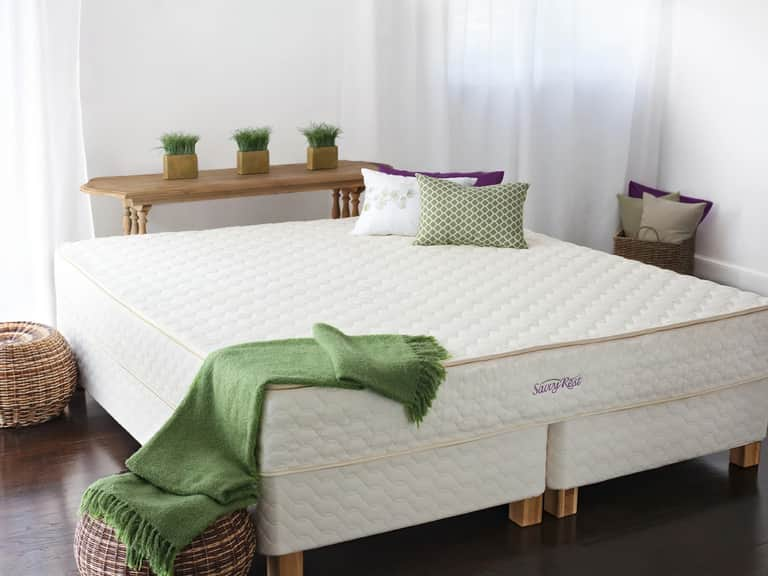
Within the marketplace, several brands and products illustrate the spectrum of vegan-friendly bedding. One illustrative example is a latex-based, organic-core mattress that offers customizable layering and is encased in 100% certified organic cotton with wool batting as a natural flame barrier. This kind of construction reflects a commitment to vegan ethics, natural materials, and a durable, long-lasting sleep surface. While product names and configurations vary, the underlying principles—certified organic components, avoidance of animal-derived materials, and transparent material disclosure—remain central to credible vegan claims.
When evaluating any such product, you should request full disclosure of the materials in every layer and verify certifications across the entire mattress assembly. If a product includes a latex layer sourced with robust organic standards (for example, GOLS), and the outer casing uses GOTS-certified fibers, you gain a coherent, end-to-end vegan story rather than partial compliance. By focusing on complete supply chain integrity and certification alignment, buyers can differentiate between marketing claims and genuine vegan convictions expressed through product design.
Concluding thoughts: a conscious choice for vegan sleep
Plant-based foams and vegan mattress components present a compelling path toward sleep that honors ethical commitments and environmental considerations. The strength of vegan-friendly options lies not merely in the absence of animal-derived materials, but in a holistic approach to design: transparent material disclosures, third-party certifications, durable performance, and thoughtful lifecycle planning. For readers seeking a practical, science-informed guide, the right vegan mattress is one that communicates clearly across every layer—from feedstock to finish, from certification to disposal.
As the conversation around sustainable sleep continues to evolve, consumers benefit from a disciplined approach: demand full material transparency, prioritize robust safety certifications, and favor products designed with end-of-life stewardship in mind. Such discipline ensures that the pursuit of vegan ethics remains in concert with durable comfort and lasting well-being.
Resources and further reading
For readers who wish to deepen their understanding, explore these avenues:
- OEKO-TEX certification documentation and product-level test reports
- Global Organic Textile Standard (GOTS) and Global Organic Latex Standard (GOLS) guidelines
- Vegan Society certifications and brand verification resources
- Independent lab testing datasets and published studies on plant-based foams
Glossary of terms
- Plant-based polyols: Chemical building blocks derived from plant sources used to produce polyurethane foams.
- GOLS: Global Organic Latex Standard, certifying organic latex production and processing.
- GOTS: Global Organic Textile Standard, certifying organic textile production and processing.
- Vegan Society certification: A label indicating that a product contains no animal-derived ingredients or by-products.
- Compression set: The tendency of a foam to permanently deform after prolonged compression.
Available products on this site
Note: The following product listings are provided for reference and align with vegan, organic, or natural materials. Click through to learn more about each item and its specifications.
-
Savvy Rest Serenity Latex Mattress — A 10-inch, customizable latex mattress with organic wool and cotton, available in multiple latex configurations. Link: Savvy Rest Serenity Latex Mattress.
-
Naturepedic Verse Organic Cotton Kids Mattress — An organic certified mattress free from flame retardants and synthetic adhesives, designed for safety and comfort. Link: Naturepedic Verse Organic Cotton Kids Mattress.
-
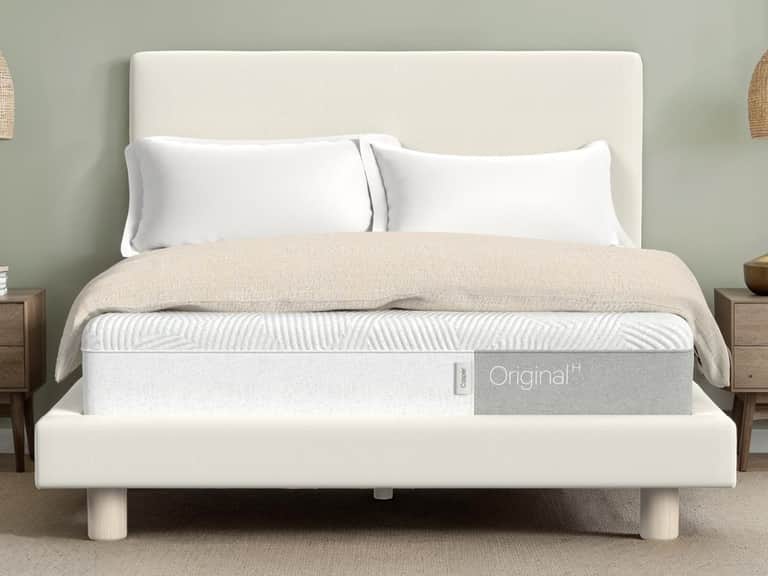
Original Hybrid Mattress — A hybrid platform combining foam and springs for balanced support. Link: Original Hybrid Mattress.
Disclaimer: All product details, certifications, and claims should be verified directly with manufacturers. This article emphasizes educational guidance on vegan and plant-based materials, and references products available on the site as illustrative examples of vegan-material options.